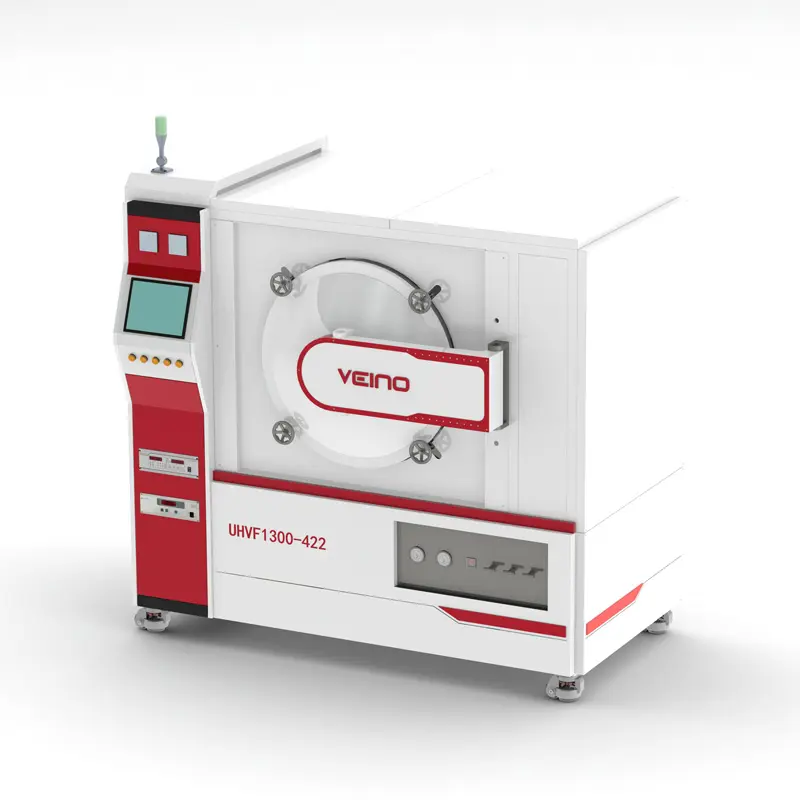
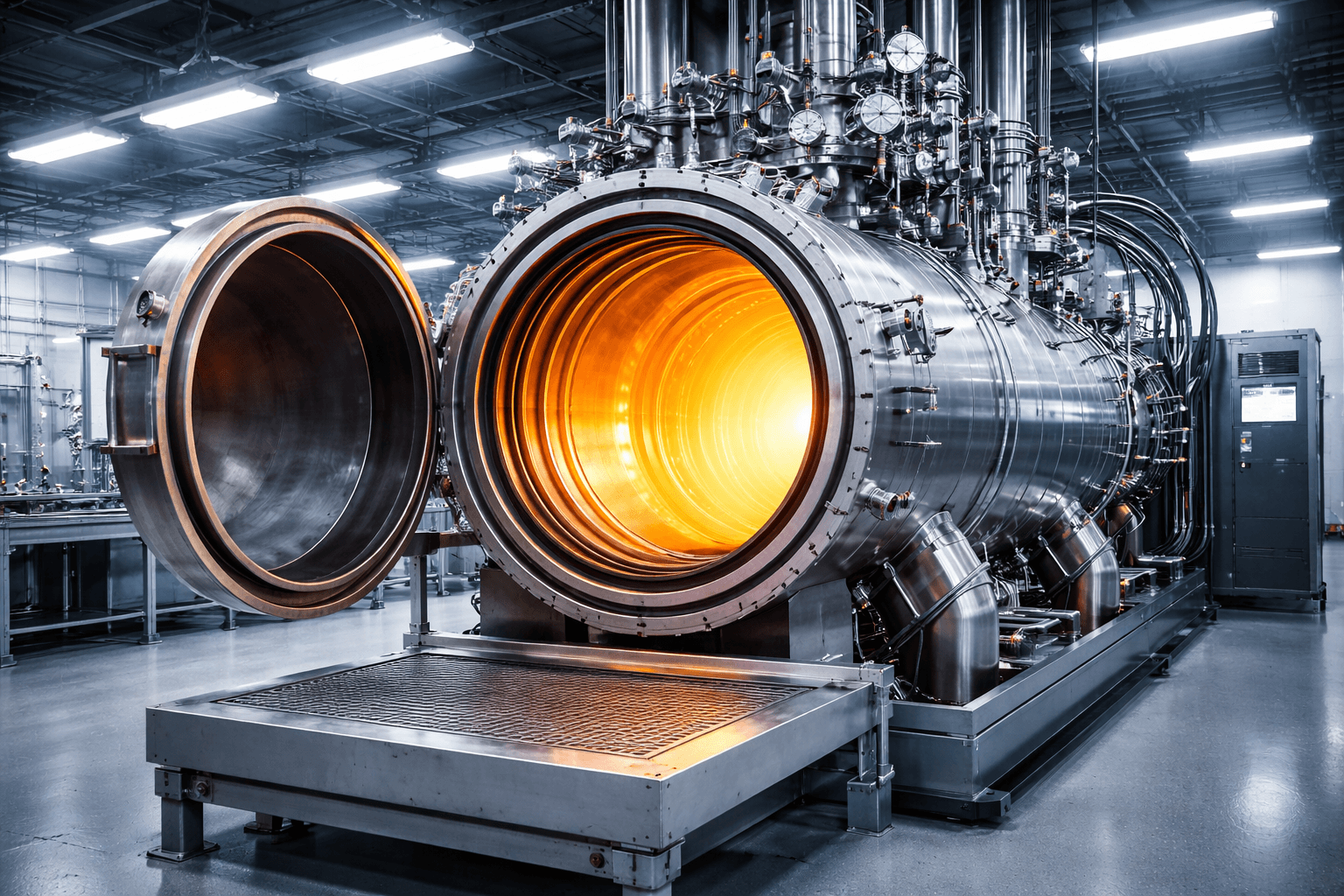
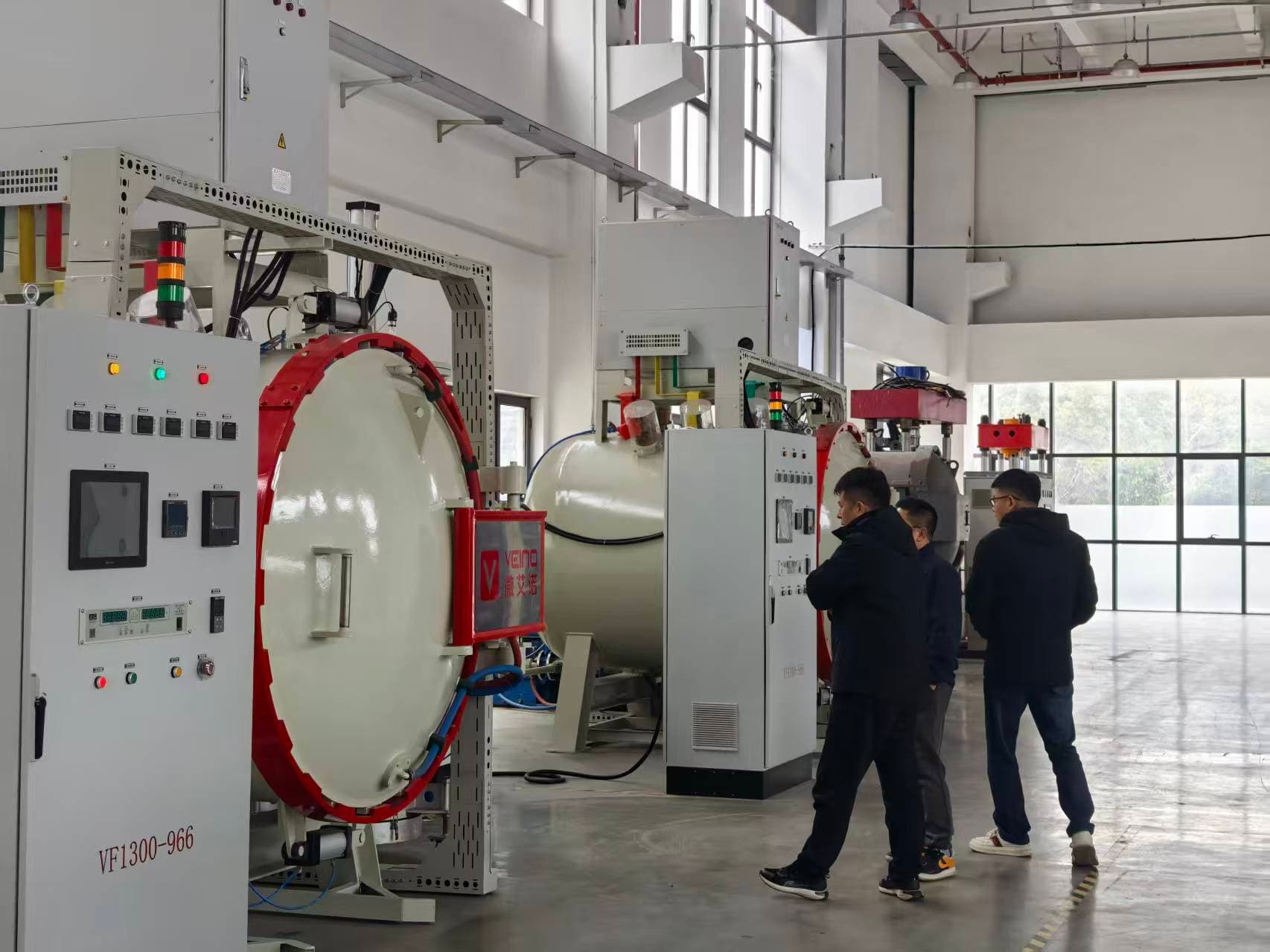
The Core Advantage: Eliminating the Atmosphere as a Variable
At elevated temperatures, air becomes an active participant in material degradation. Oxygen, moisture, nitrogen, and trace hydrocarbons initiate oxidation, decarburization, and unwanted chemical diffusion. These reactions alter surface chemistry and weaken structural integrity long before a part ever enters service.
A vacuum furnace removes this risk at its source.
By evacuating the chamber to high or ultra-high vacuum levels, reactive gases are eliminated before heating begins. What remains is a controlled, inert environment where thermal energy can be applied without interference.
Zero Oxidation, Zero Compromise
Without oxygen present, scaling and surface oxidation cannot occur. Components exit the furnace clean, metallic, and dimensionally stable, often eliminating the need for post-processing such as pickling, grinding, or chemical cleaning.
For reactive materials like titanium and advanced superalloys, this protection is critical. Vacuum processing prevents brittle surface layers, preserves fatigue life, and ensures the material performs exactly as engineered.
Controlled Gas Interaction; By Design
When required, the vacuum environment enables precise introduction of high-purity process gases such as argon, nitrogen, or hydrogen. Unlike atmospheric furnaces, these gases are not competing with contaminants.
This enables highly controlled processes, including:
- Vacuum brazing with superior joint integrity
- Sintering of high-purity or fine-grain materials
- Annealing and stress relief without surface degradation
- Heat treatment of medical and aerospace components where contamination is unacceptable
Precision Heating: Uniformity That Defines Reliability
Environmental control is only half the equation. True process mastery depends on how accurately heat is delivered, maintained, and removed.
Modern vacuum furnaces are engineered for exceptional thermal uniformity. Advanced multi-zone heating systems, optimized hot-zone design, and real-time feedback ensure that every component experiences the same thermal history, regardless of its position in the workload.
Typical uniformity levels of ±5 °C or better are not simply performance metrics; they are the foundation of predictable metallurgy.
Uniform heating ensures:
- Consistent hardness and mechanical properties
- Controlled grain growth and phase transformation
- Reliable stress relief across complex geometries
Automation, Data, and Process Certainty
Vacuum furnace operation is governed by sophisticated control systems that remove human variability from the equation.
Programmable control platforms manage every stage of the cycle:
- Chamber evacuation and leak verification
- Controlled heating ramps and soak profiles
- Gas backfilling and pressure regulation
- Precision cooling or high-pressure gas quenching
Each cycle is fully recorded, creating a complete digital process history. This data traceability is essential for regulated industries and critical applications, enabling validation, audits, and continuous process optimization.
What once depended on operator judgment is now executed with mathematical consistency.
Understanding the Investment
Vacuum furnace technology is not chosen for convenience; it is chosen for necessity.
| Consideration | Operational Reality | Long-Term Value |
| Capital Investment | Higher than conventional furnaces | Reduced scrap, rework, and downstream processing |
| Cycle Duration | Longer due to controlled environments | Superior material performance and consistency |
| Technical Complexity | Requires precision engineering and maintenance | Long-term reliability for critical applications |
When component failure carries a high cost or unacceptable risk, the value proposition becomes clear. Predictability is not an expense; it is a safeguard.
When Vacuum Furnaces Become Essential
A vacuum furnace is the right solution when your process demands:
- Maximum material performance under extreme mechanical or thermal stress
- Perfect repeatability across every batch and every cycle
- Processing of reactive or high-value materials where atmospheric exposure is not an option
- Clean, bright surfaces without secondary finishing
In these environments, control is not optional; it is the entire objective.
Engineering the Environment That Unlocks Material Potential
True heat treatment excellence is achieved when temperature, atmosphere, and time are controlled as a single, integrated system.
Normantherm vacuum furnaces are developed with this philosophy at their core; combining robust mechanical design, advanced thermal engineering, and intelligent control to create environments where materials perform at their highest potential.
When the environment is perfectly controlled, materials reveal their full potential.