What Is a Furnace Hot Zone?
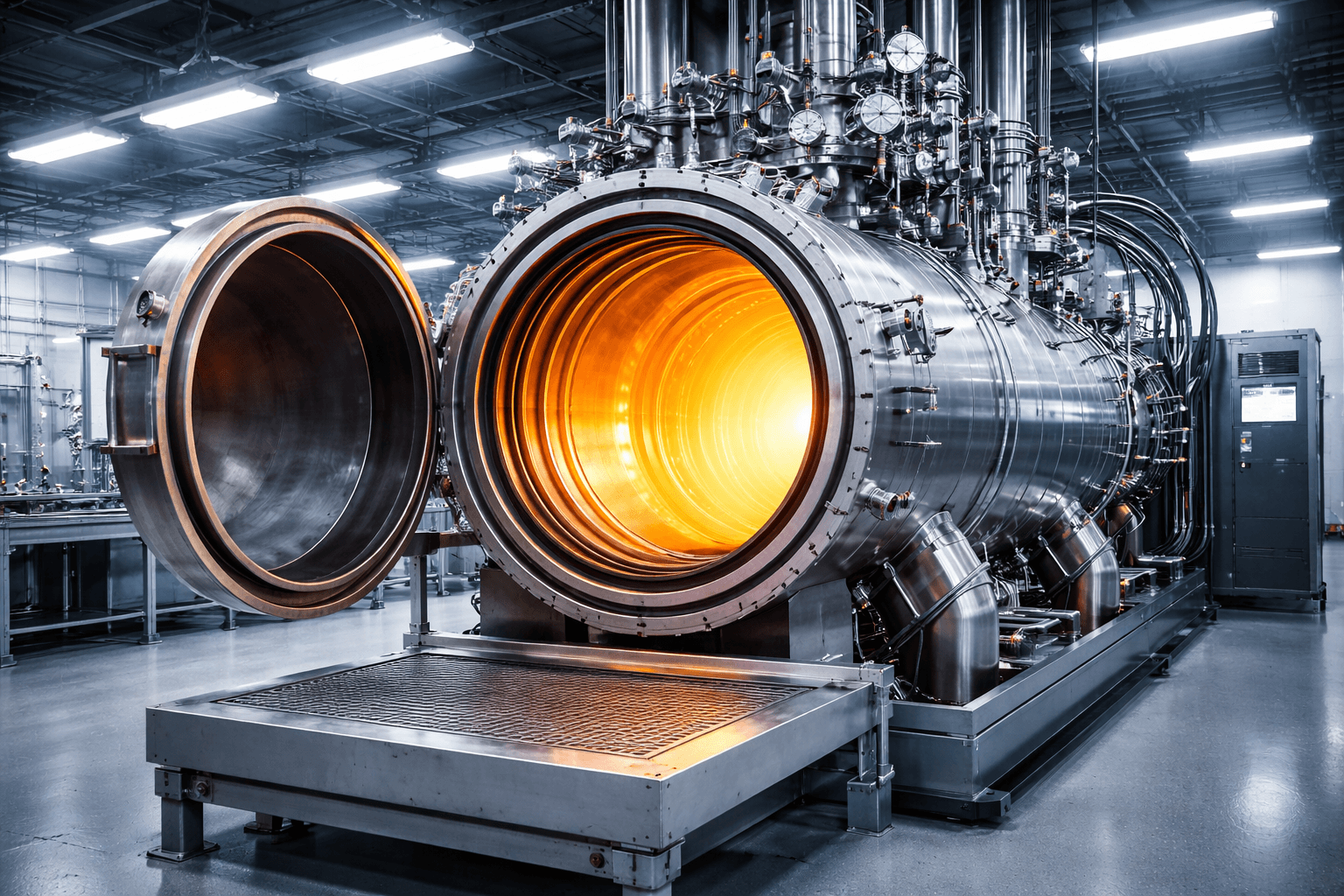
The hot zone is the heated area inside a vacuum furnace that contains the heating elements, insulation, and the effective working space. Its primary function is to transfer heat to the workpiece while maintaining a controlled and uniform temperature.
Because the hot zone operates under demanding thermal and vacuum conditions, its material must be selected carefully. Different materials behave differently at high temperatures and under vacuum, making hot-zone selection an important part of furnace design.
Silicon Carbide Hot Zones
Silicon carbide is widely used for high-temperature heating applications because of its good thermal stability and resistance to oxidation compared with carbon-based heating elements.
SiC heating elements are suitable for applications requiring relatively high temperatures and can provide efficient heat transfer. They are often considered when the process requires a balance between temperature capability, durability, and operational convenience.
However, SiC elements can experience changes in electrical resistance as they age. Furnace control systems therefore need to account for element characteristics during long-term operation.
SiC hot zones can be suitable for applications such as high-temperature sintering, ceramics processing, laboratory heating, and selected industrial heat-treatment processes.
Graphite Hot Zones
Graphite is one of the most widely used hot-zone materials in high-temperature vacuum furnaces. It combines high-temperature capability, relatively low density, good thermal properties, and compatibility with many vacuum heat-treatment processes.
Graphite heating elements can operate at very high temperatures under suitable vacuum or inert-gas conditions. Graphite insulation is also commonly used to reduce heat loss and improve thermal efficiency.
One important consideration is that graphite can react with oxygen at elevated temperatures. Therefore, the furnace atmosphere and vacuum conditions must be properly controlled. Carbon contamination can also be a consideration for certain materials and processes.
Graphite hot zones are commonly selected for applications such as vacuum sintering, brazing, annealing, hardening, stress relieving, and high-temperature processing of compatible materials.
Tungsten Hot Zones
Tungsten offers extremely high-temperature capability and very low vapor pressure, making it suitable for specialized high-temperature vacuum applications.
Compared with graphite, tungsten can provide a cleaner heating environment for processes where carbon contamination must be minimized. It is therefore particularly useful for processing certain reactive, sensitive, or high-purity materials.
However, tungsten hot zones generally require carefully controlled vacuum conditions because tungsten can oxidize at elevated temperatures when exposed to oxygen. Tungsten systems can also have higher material and system costs compared with more conventional hot-zone configurations.
Tungsten hot zones are typically considered for demanding applications involving very high temperatures, high-purity materials, and processes where contamination control is particularly important.
SiC vs Graphite vs Tungsten
| Hot-Zone Material | Key Advantages | Main Considerations | Typical Applications |
|---|---|---|---|
| SiC | Good high-temperature performance, robust heating elements | Electrical resistance changes with service life; application-dependent atmosphere requirements | Ceramics, sintering, laboratory and industrial heating |
| Graphite | High-temperature capability, efficient, widely used, relatively economical | Carbon contamination and oxidation must be controlled | Vacuum brazing, sintering, hardening, annealing, stress relieving |
| Tungsten | Extremely high-temperature capability, low vapor pressure, low carbon contamination | Higher cost; requires well-controlled vacuum conditions | High-purity and specialized high-temperature processing |
Which Hot Zone Should You Choose?
There is no single hot-zone material that is suitable for every furnace or application. The correct selection should be based on the complete process requirement rather than temperature alone.
For example, graphite may be a practical choice for general industrial vacuum heat treatment and vacuum brazing where carbon compatibility is acceptable. SiC can be considered for applications requiring high-temperature heating with specific atmosphere and process requirements. Tungsten becomes more relevant when very high temperatures and strict contamination control are important.
Other factors should also be considered, including:
- Required maximum and working temperature
- Vacuum level and operating atmosphere
- Workpiece material and risk of contamination
- Heating rate and temperature uniformity
- Furnace working-zone dimensions
- Production volume and loading configuration
- Cooling requirements
- Maintenance and replacement requirements
- Total operating and equipment cost
Hot-Zone Selection at NTFurnace
At NTFurnace, hot-zone configuration is selected according to the customer's actual process requirements rather than using a one-size-fits-all approach. Depending on the application, furnace design can incorporate different heating and insulation materials, temperature-control arrangements, working-zone dimensions, and vacuum-system configurations.
Whether the requirement involves vacuum brazing, sintering, hardening, annealing, stress relieving, or other high-temperature processes, the hot zone should be designed to provide the required temperature capability, thermal uniformity, vacuum compatibility, and process repeatability.
Choosing the right hot-zone material at the beginning of furnace design can have a significant impact on furnace performance and long-term operating reliability. Understanding the differences between SiC, graphite, and tungsten helps manufacturers select a furnace configuration that is better matched to their materials, production requirements, and processing conditions.