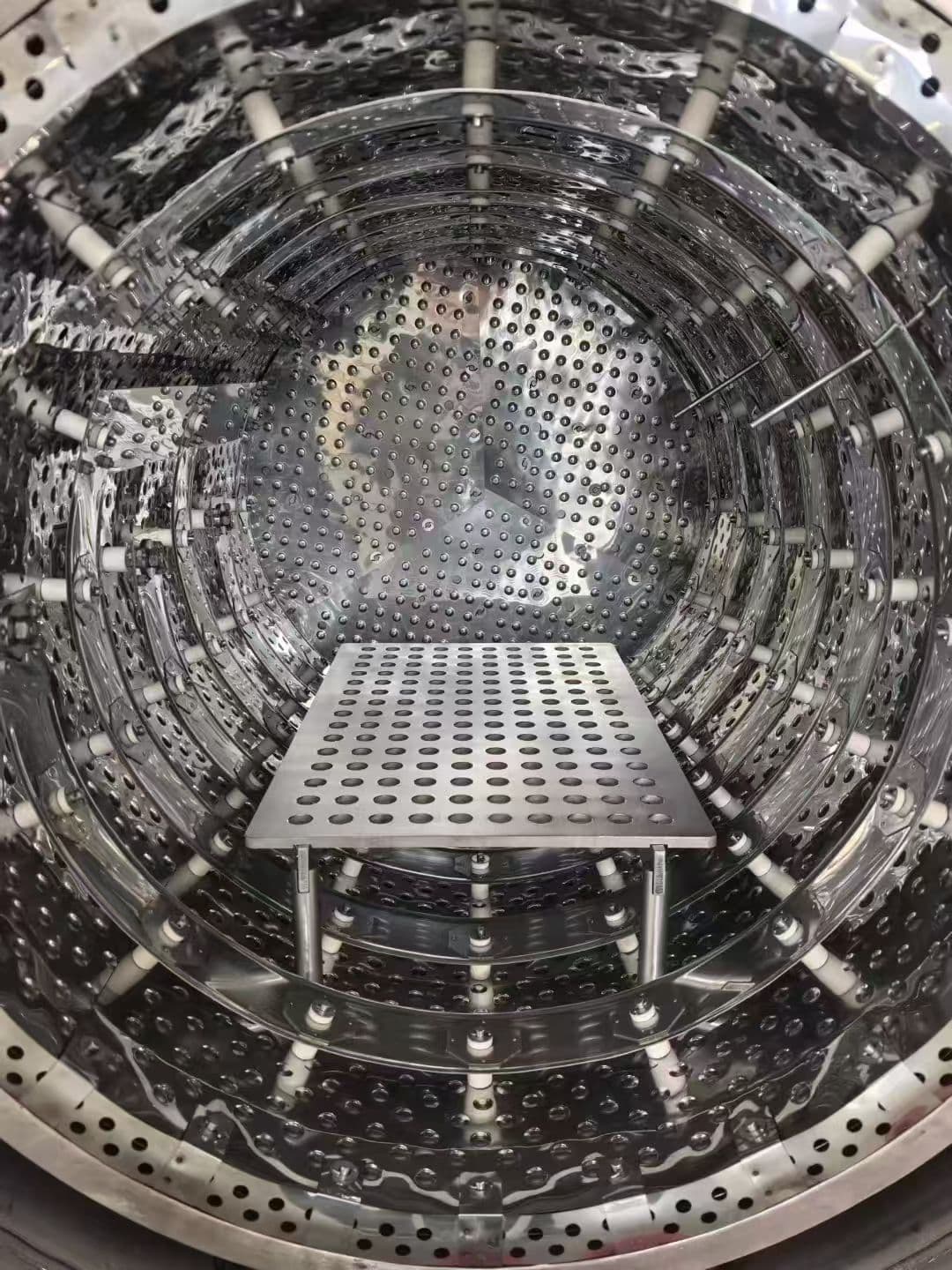
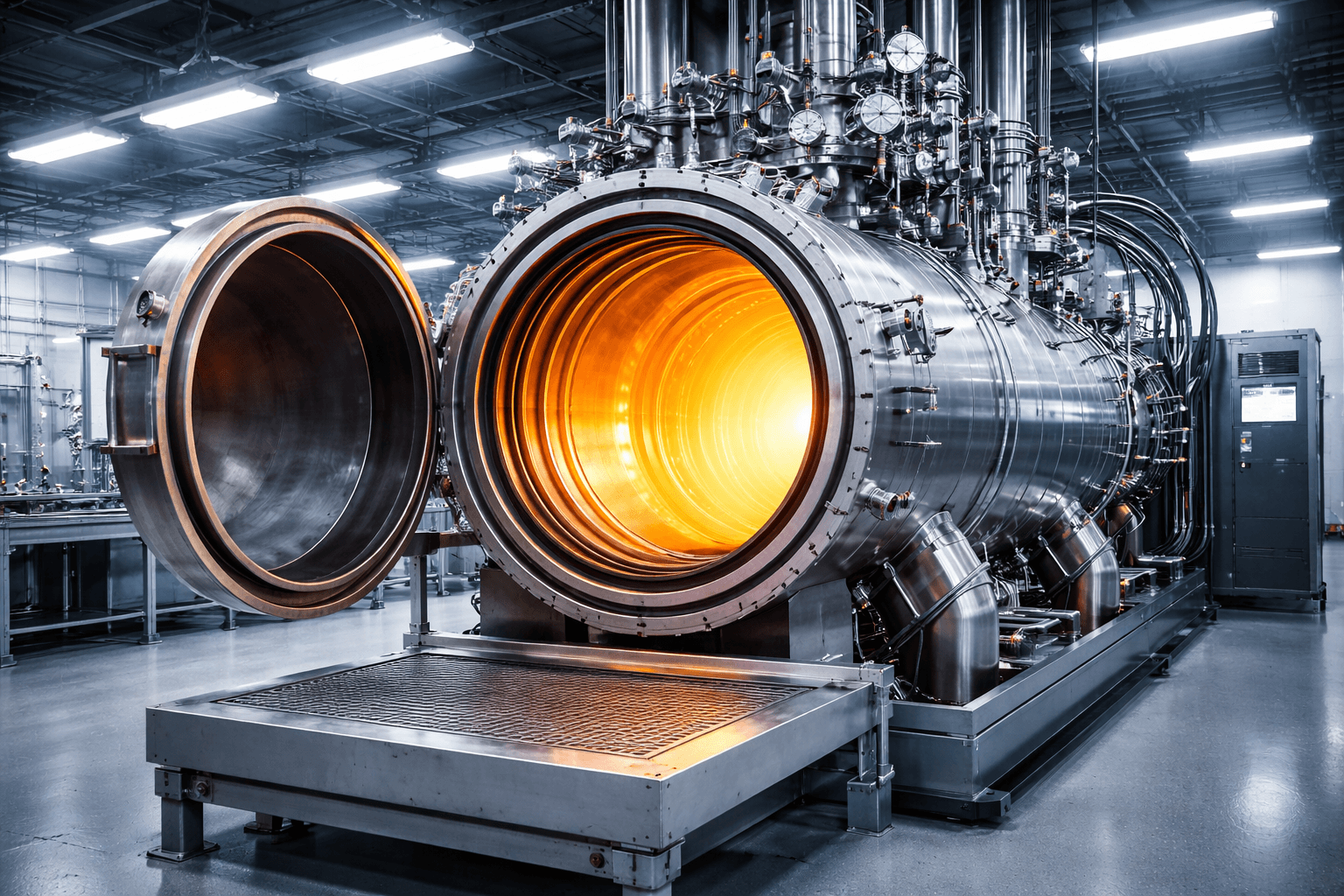
The high-temperature vacuum brazing furnace can be filled with inert gas, active gas, or mixed gas under specific process requirements. The detailed explanation of the specific gas types and their application are mentioned below:
- Inert gases
Inert gases, such as argon and helium, are commonly used in vacuum brazing to provide a protective atmosphere without reacting with the workpiece or filler material. These gases are particularly effective in preventing oxidation and contamination when venting the vacuum or during cool-down stages. Argon, due to its high density, is often preferred for heavier components where effective coverage is needed. Helium, with its superior thermal conductivity, is used when rapid and uniform cooling is required to minimize residual stresses in the assembly. Inert gases are typically introduced either during the controlled backfill stage, after the brazing temperature is reached and the vacuum has removed residual oxygen, or during cooling to avoid surface oxidation.
- Active gases
Active gases such as hydrogen or forming gas (a mixture of hydrogen and nitrogen) play a more dynamic role in vacuum brazing. Hydrogen, in particular, acts as a reducing agent, chemically interacting with any residual oxides on the metal surfaces to ensure clean and metallurgically sound joints. Forming gas, containing 5 - 10% hydrogen in nitrogen, offers a safer alternative while maintaining similar reducing properties. Active gases are usually introduced after the initial vacuum stage has removed most contaminants but before reaching peak brazing temperatures, ensuring maximum oxide reduction. Precise control of the gas flow rate and partial pressure is essential; excessive hydrogen can be hazardous and may affect furnace components, while insufficient levels may leave oxides on the joint surfaces.
- Mixed gases
In some advanced applications, a controlled mixture of inert and active gases is used to balance the benefits of surface protection and chemical reduction. For instance, a combination of argon and a small percentage of hydrogen can provide the protective characteristics of an inert atmosphere while still actively reducing surface oxides. Mixed gases are typically introduced at carefully timed intervals, often during the temperature ramp-up or just before reaching the brazing temperature, allowing uniform gas distribution and optimal surface interaction.
The ratios, flow rates, and timing are usually programmed within the furnace’s automation system to ensure reproducibility across multiple cycles.
Timing and control points for gas introduction
Generally, gases are introduced at specific stages: during pump-down, after vacuum stabilization, during the temperature ramp, at peak brazing temperature, and during controlled cooling. Advanced vacuum furnaces, such as those from Normantherm, allow programmable gas valves and flow meters, enabling operators to maintain precise partial pressures, prevent back-diffusion of contaminants, and ensure uniform gas coverage. Sensors monitor both temperature and vacuum levels, adjusting gas flow automatically to match the thermal profile and desired chemical conditions.
To sum up, the careful selection and timing of gases in a high-temperature vacuum brazing furnace are critical to achieving clean, reliable, and high-strength joints. Inert gases protect surfaces, active gases reduce oxides, and mixed gases offer a combination of both effects. When integrated with precise control systems, these gas strategies enhance both process consistency and the quality of brazed assemblies.
Edited by: Shristi Paudyal
© 2026 Normantherm Vacuum Furnace. All rights reserved.