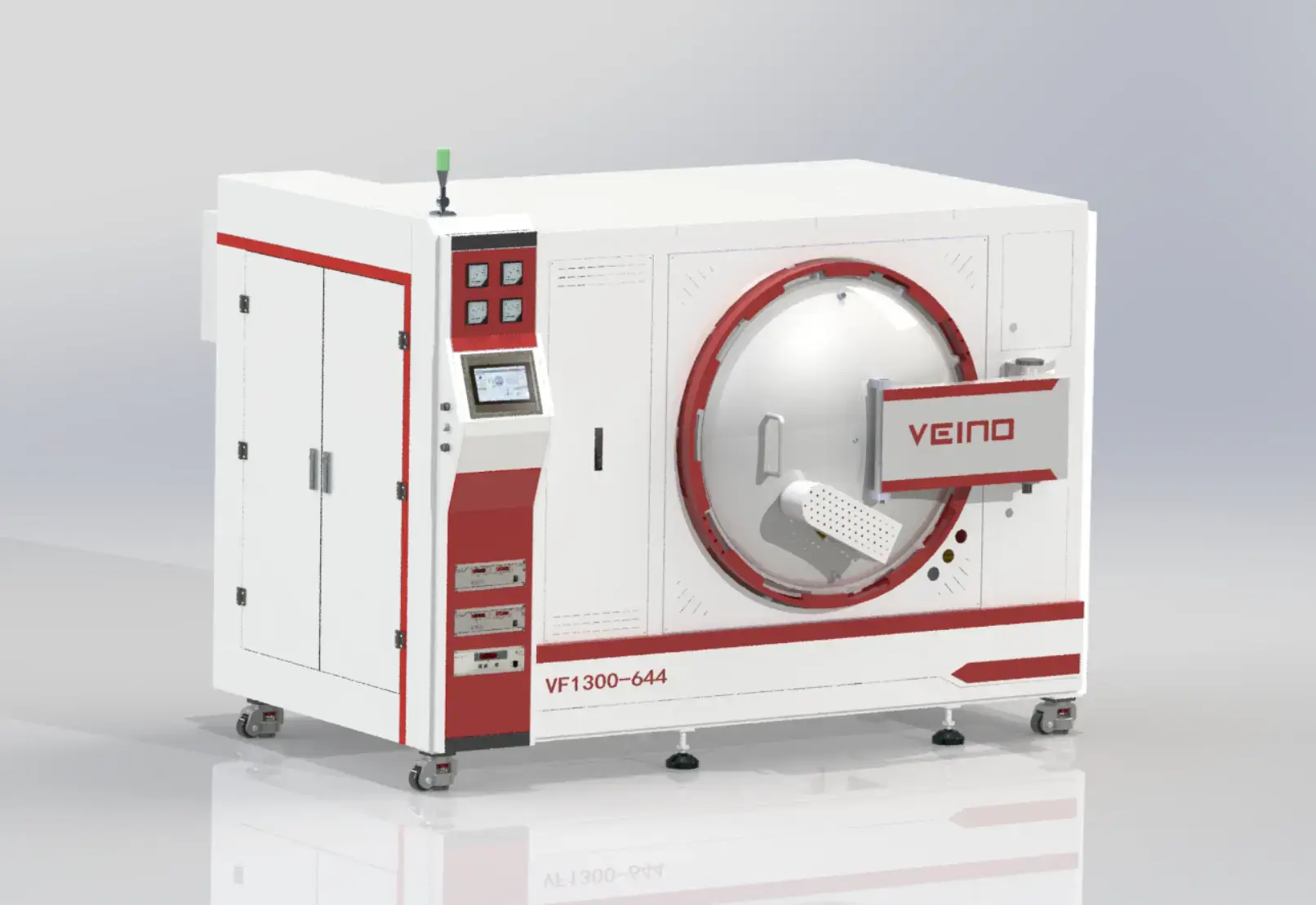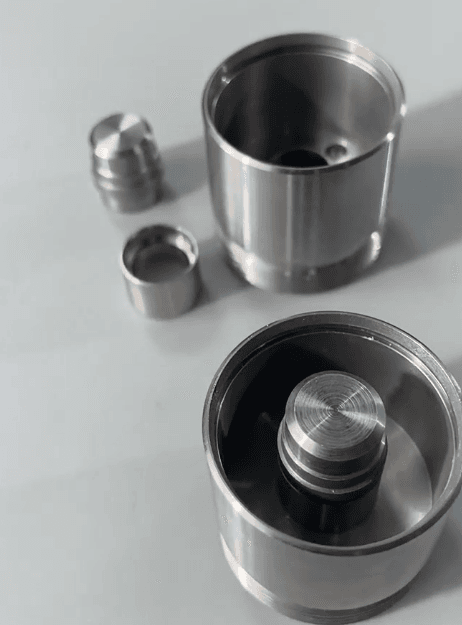
The sample shown above was processed in a vacuum brazing furnace for the joining of carbon steel and stainless steel components under controlled vacuum conditions. Brazing dissimilar ferrous materials requires precise control of vacuum level, brazing temperature, heating uniformity, and holding time to ensure proper wetting and metallurgical bonding at the joint interface. During the process, the components were heated in a clean oxygen-free environment, preventing surface oxidation and allowing the brazing filler metal to flow uniformly through the joint clearance by capillary action.
For stainless steel and carbon steel assemblies, vacuum brazing provides significant advantages over conventional atmosphere brazing methods. The vacuum environment minimizes contamination, reduces oxide formation, and improves joint cleanliness, which is especially important for precision-machined components with tight dimensional tolerances. Controlled heating and cooling inside the furnace also help reduce thermal distortion and residual stress while maintaining surface finish quality after brazing. The processed sample achieved clean joint formation, consistent filler distribution, and excellent assembly integrity suitable for high-precision engineering applications.
At Normantherm Vacuum Furnaces, vacuum brazing parameters are optimized according to material grade, joint geometry, filler alloy selection, and production requirements. Our vacuum furnace systems are suitable for precision joining applications in automotive components, tooling assemblies, heat exchangers, medical parts, and other high-performance industrial products where repeatable brazing quality is essential.